
OUR GROWING AREAS
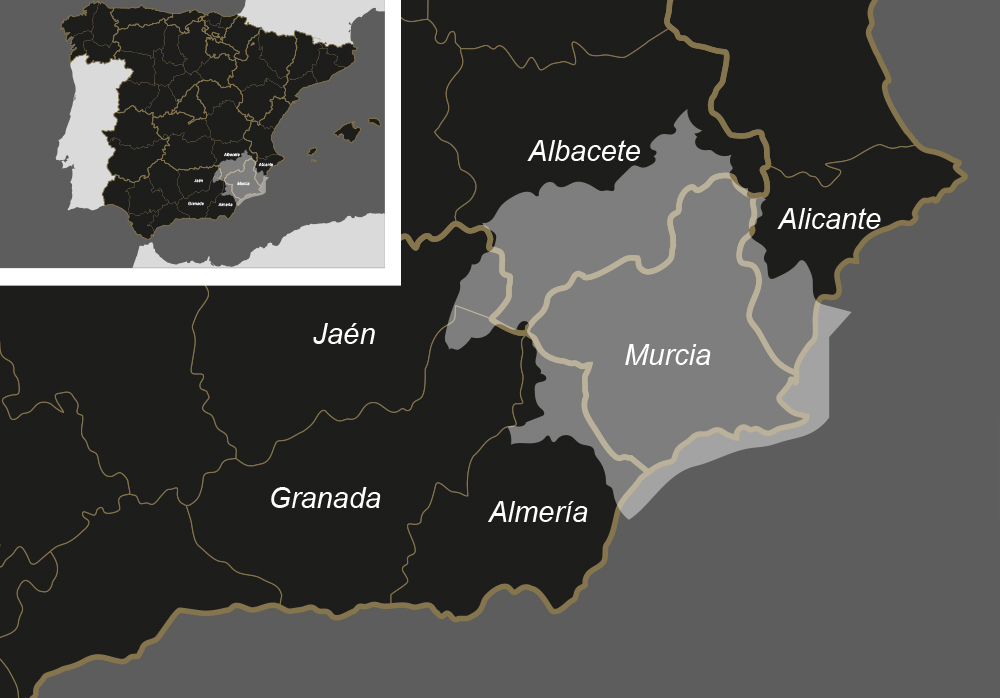
Our growing areas are distributed throughout the communities of Andalusia, Murcia, Castilla La Mancha and the Valencian Community:
- Albacete
- Cuenca
- Toledo
- Ciudad Real
- Almería
- Murcia
- Alicante
- Valencia
CLIMATOLOGY OF THE CULTIVATION ZONE
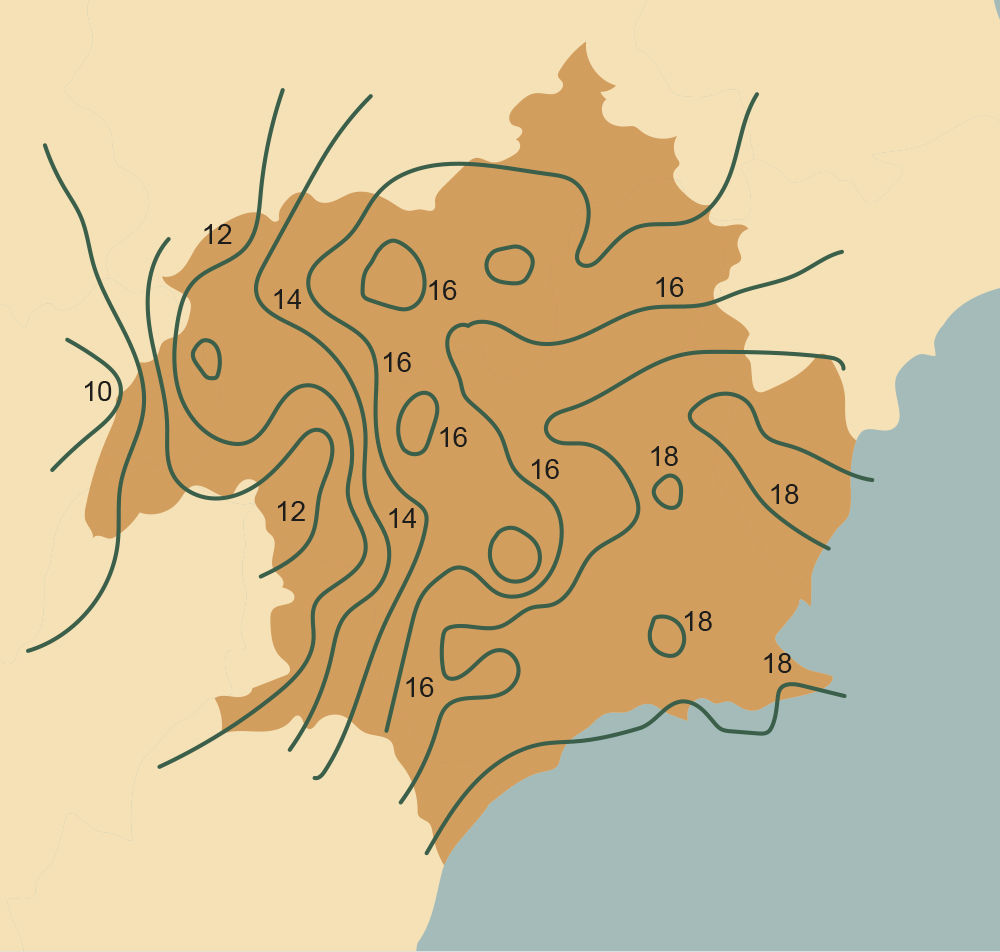
Southeast Spain is characterized by great climatic contrasts from one geographical area to another, with great droughts and frequent floods due to torrential rains, as well as high temperatures that contrast with catastrophic frosts.
Relief and geography are two factors that will have a very clear influence on the climate of this territory, modifying and diversifying it.
There is a great climatic variety within the area, which sometimes becomes local, giving rise to what is called topoclimate or local climate.
- JANUARY (29 mm/ month)
- FEBRUARY (28 mm/ month)
- MARCH (29 mm/ month)
- APRIL (28 mm/ month)
- MAY (31 mm/ month)
- JUNE (17 mm/ month)
- JULY (7 mm/ month)
- AUGUST (9 mm/ month)
- SEPTEMBER (37 mm/ month)
- OCTOBER (50 mm/ month)
- NOVEMBER (39 mm/ month)
- DECEMBER (27 mm/ month)
EDAPHOLOGY
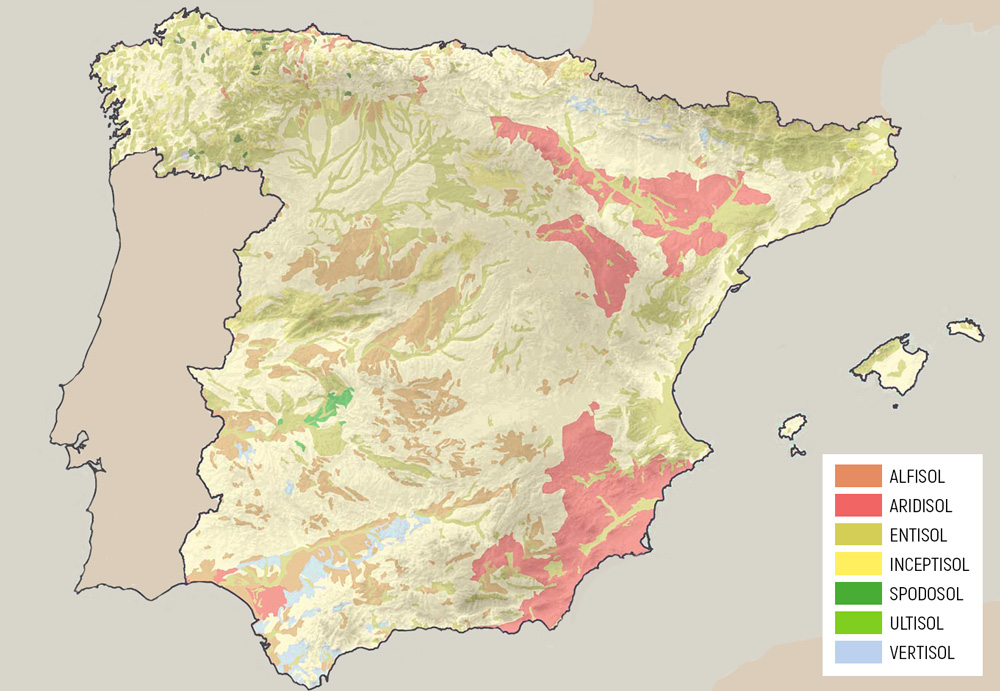
Southeast Spain generally has poorly developed soils with few horizons and difficult differentiation.
Its depth and physicochemical characteristics are determined by the type of geological substrate, as well as by the topology and management of the land.
The deepest soils are found on soft substrates and in flat areas, and the shallowest soils are found on resistant rock substrates and on slopes.
The amount of calcium carbonate varies depending on the type of substrate on which it appears.
The amount of organic matter present in soil is not, in general, very high.
Nitrogen in soils has an organic origin, with nitrogen and organic matter levels being similar.
The concentration of available phosphorus in soils is generally low. The exchange capacity of soils is, for the most part, medium.
TYPES OF OLIVES
ARBEQUINA | ARBOSANA | KORONEIKI | SIKITITA | PICUAL | CORNICABRA | GORDAL DE HELLÍN | LECHÍN DE GRANADA | BLANQUETA
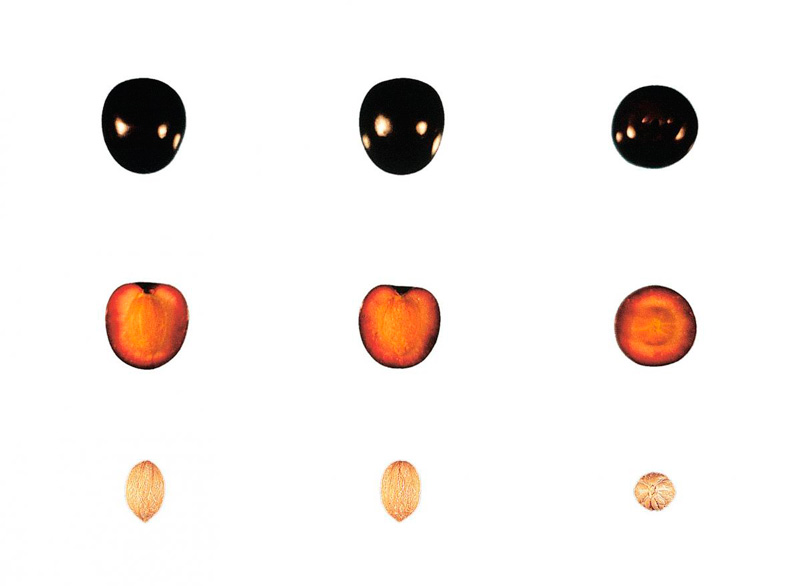
ARBOSANA
Name: Arbequina receives this name from its area of origin, probably near the town of Arbeca in Lleida.
Other names: Arbequí, Arbequín and Blancal.
Cultivation area: This is the most important variety in Catalonia, where it covers more than 55,000 hectares. It has also spread throughout the rest of Spain, especially in Andalusia. It is the benchmark variety for new super-intensive plantations, which is why, in addition to Spain, it has been planted in many other countries: France, the USA, Chile, Portugal, Italy, Tunisia, Morocco, Australia, and Argentina.
Agronomic considerations: It has low vigor, an open growth habit, and a medium-high canopy density. It is considered self-fertile. It enters production early and has high and consistent productivity. The oil yield is high, and the oil quality is excellent, although it has low stability. It has a high rooting capacity.
Resistances, tolerances, and susceptibilities:
- Tuberculosis: Susceptible
- Repilo : Moderately tolerant
- Verticillium wilt : Susceptible
- Limitations: Iron chlorosis in very calcareous soils
- Other: Cold resistance
Characters morphological :
- Leaf: Black when mature. Small, spherical, and symmetrical. The apex is rounded and lacks a nipple. The maximum cross-section is circular and slightly displaced towards the base. pulp / bone middle.
- Fruit: Ovoid and symmetrical shape. Surface rough, with seven to ten fibrovascular grooves grouped along the suture. The base and apex are rounded. The latter has a mucro. The maximum transverse selection is circular and is centered.
- Bone: Ovoid and symmetrical shape. Rough surface, with seven to ten fibrovascular grooves grouped near the suture. The base and apex are rounded. The latter has a mucro. The maximum transverse selection is circular and is focused
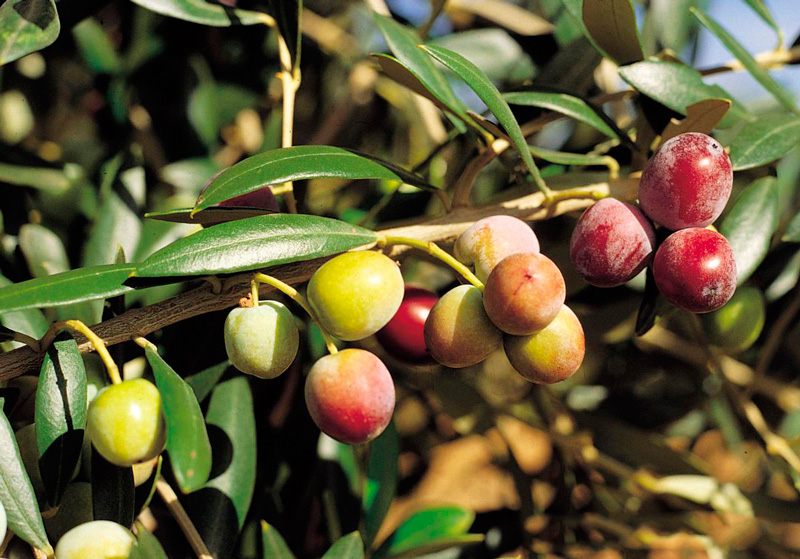
ARBOSANA
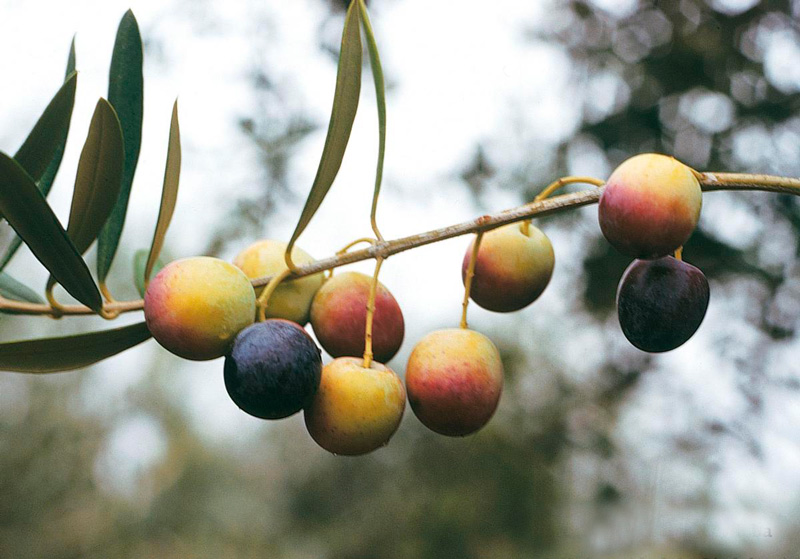
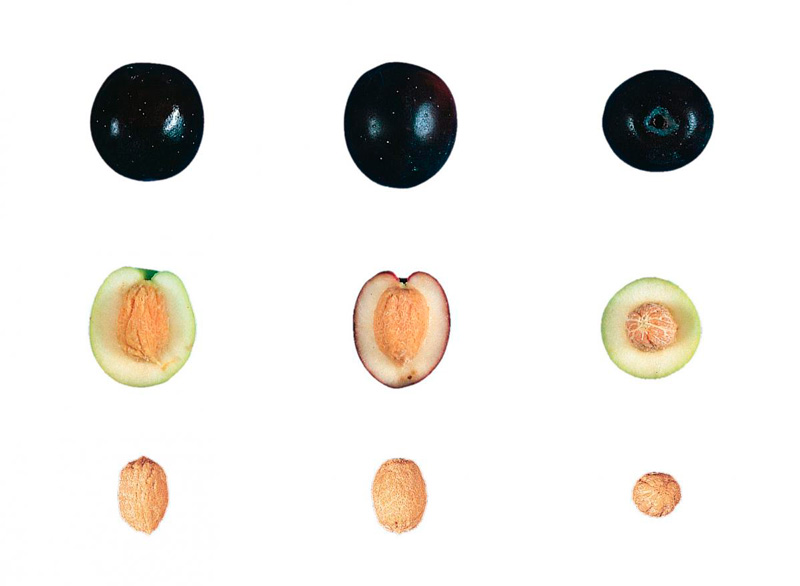
Name: Arbosana is originally from Penedès, probably named after the Tarragona town of l’Arboç.
Cultivation area: It is currently being spread throughout the country. As it is one of the varieties used in super-intensive plantations, it is also being planted in many other countries on several continents.
Agronomic considerations: This variety boasts very high and consistent productivity, with very early entry into production. It has reduced vigor, making it ideal for intensive cultivation. It matures late. While its oil content is medium (19-20%), it is highly valued for its organoleptic characteristics. It also possesses a high rooting capacity.
Resistances, tolerances, and susceptibilities:
- Tuberculosis: Susceptible
- Repilo : Resistant
- Verticillium wilt : Susceptible
Characters morphological :
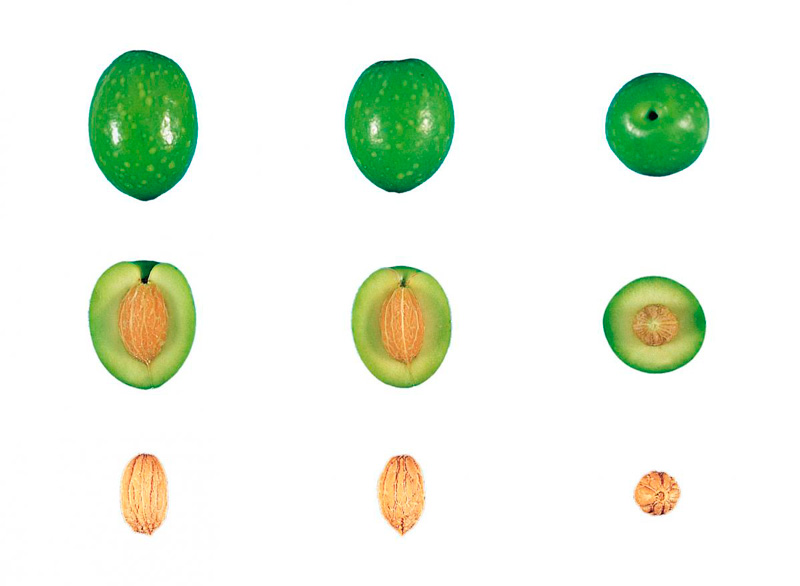
- Fruit: violet in color when ripe, with small and abundant lenticels, small in size, spherical and slightly asymmetrical.
- Bone: ovoid and symmetrical shape.
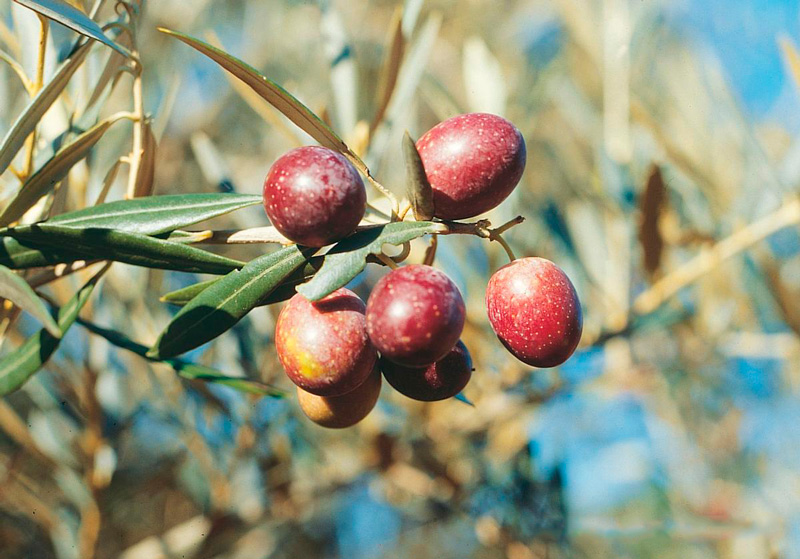
KORONEIKI
Name: Originally from the Penedès region, it probably takes its name from the Tarragona town of Koroni . Variety originating from Greece.
Other names: Koroni , Kritikia , Ladolia and Psylolius .
Cultivation area: It occupies 50-60% of the olive-growing area in its country of origin. As it is one of the varieties used in super-intensive plantations, it is also being planted in many other countries on several continents.
Agronomic considerations: A medium-vigor variety with an open growth habit, very high productivity, oil yield around 20%, and excellent and very stable oil quality. It enters production very early. This variety is of interest for super-intensive plantations.
Resistances, tolerances, and susceptibilities:
- Tuberculosis: Susceptible
- Repilo : Resistant
- Verticillium wilt : Moderately susceptible
- Other: It is drought-resistant but does not tolerate cold
Characters morphological :
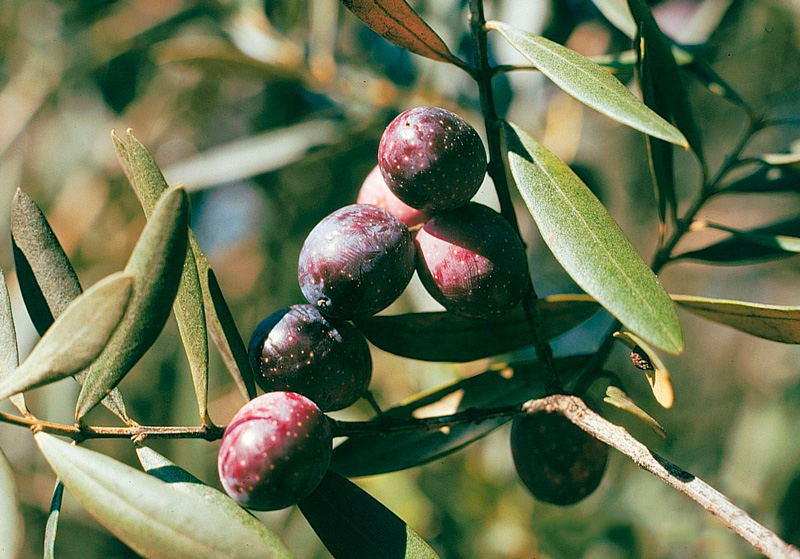
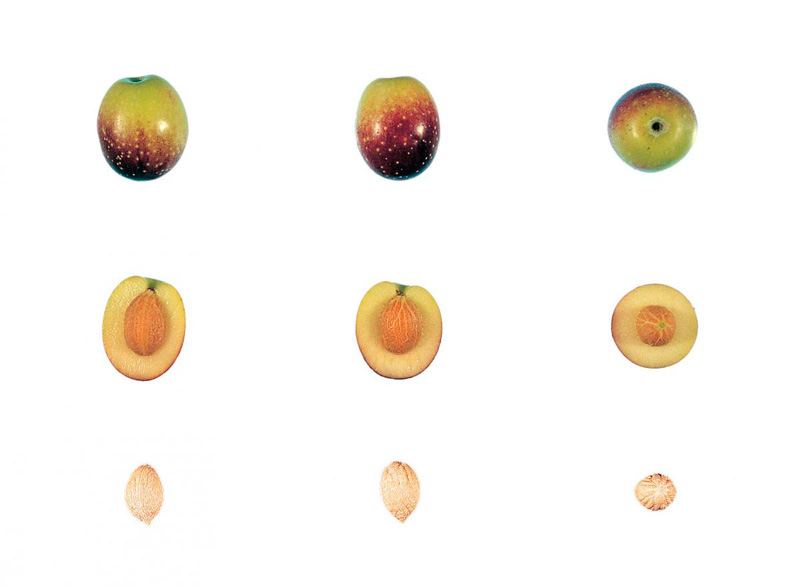
- Leaf: It has a short, narrow, elliptical-lanceolate leaf.
- Bone: small and elongated, slightly asymmetrical.
SIKITITA
Name: New olive variety selected for high-density plantings. Developed by researchers from the University of Córdoba and the Andalusian Institute of Agricultural Research and Training (IFAPA) within the framework of an olive genetic improvement program that both institutions have been carrying out since 1991. It comes from a cross between ‘Picual’ (female parent) and ‘Arbequina’ (male parent).
Cultivation area: The variety has been protected in the European Union and in Chile, Argentina, Mexico, the United States (with the name ‘Chiquitita’), South Africa, Australia, Tunisia, Morocco and Turkey.
Agronomic considerations: Its main characteristic is its very low vigor and compact, weeping habit, which means its canopy volume remains around 60-70% of that of ‘Arbequina’. These characteristics make it especially suitable for hedgerow plantings, where planting densities reach 2000 olive trees/ha. In the case of ‘ Sikitita ‘, due to its lower vigor, planting distances of 3.5 x 1.25 m can be used. It has an early start to production and exhibits high productivity, good oil yield, and extractability. Its oil displays very good organoleptic characteristics and is characterized by being fruity and sweet with a well-balanced bitterness and spiciness.
Resistances, tolerances, and susceptibilities:
- Tuberculosis: Under study
- Repilo : Moderately resistant
- Verticillium wilt : Under study
- Other : Cold resistant
Characters morphological :
- Tree: weak vigor .
- Body type: weepy .
- Cup: dense
- Leaf: elliptic-lanceolate shape, short and narrow.
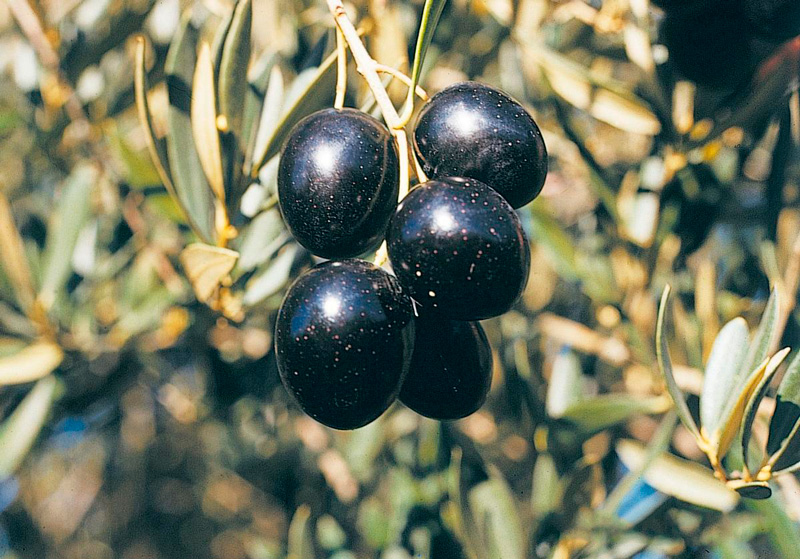
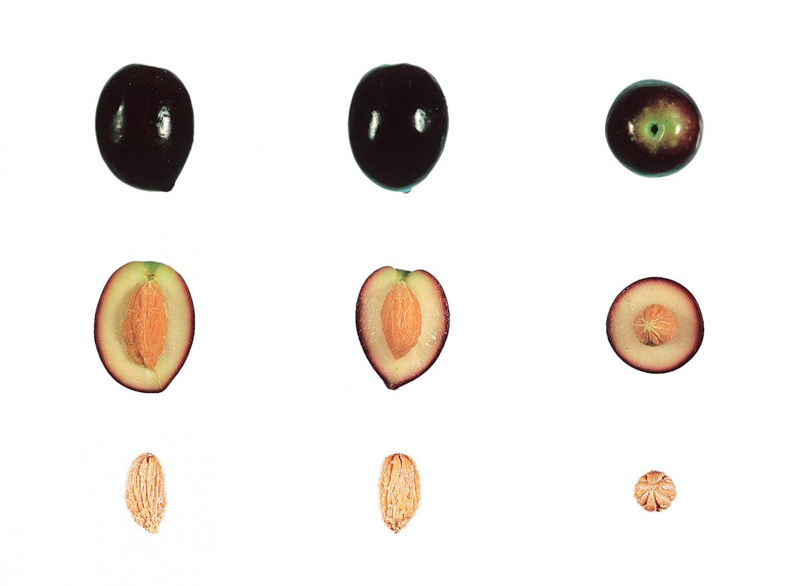
- Fruit: ovoid and symmetrical shape, without mucro, medium weight, black in color when ripe.
- Bone: Elliptical and symmetrical shape with mucro.
PICUAL
Name: Picual receives this name because of the pointed apex of its fruits.
Other names: Andaluza, Jabata, Marteño, Lopereño , Marcona, Mollejona , Nevado, Nevado Blanco, Picua , Picudilla, Pico de Grula , Pico Real and Salgar.
Cultivation area: Originally from Jaén, this variety accounts for 50% of Spanish production and 20% of global production. It is the main variety in Andalusia due to the significant planted area; it is estimated that one out of every two olive trees in this autonomous community is of this variety.
Agronomic considerations: This vigorous variety establishes its yield early, producing high and relatively consistent results. It is considered very hard due to its adaptability to diverse climate and soil conditions; in particular, it is considered tolerant of frost and excessive soil moisture. Its flowering period is mid-season, and it typically ensures sufficient fruit set through self-pollination. It roots easily from both hardwood cuttings and semi-hardwood cuttings propagated by misting.
It ripens early, and the fruit has low resistance to detachment, although it remains on the tree until harvest, which is easy. It has a high oil yield. This variety has very high and consistent productivity and comes into production very early. It has reduced vigor, making it very interesting for intensive cultivation. It ripens late. The oil content is medium (19-20%), although it is highly valued for its organoleptic characteristics. It has a high rooting capacity.
Resistances, tolerances, and susceptibilities:
- Tuberculosis: Susceptible
- Repilo : Resistant
- Verticillium wilt : Susceptible
Characters morphological :
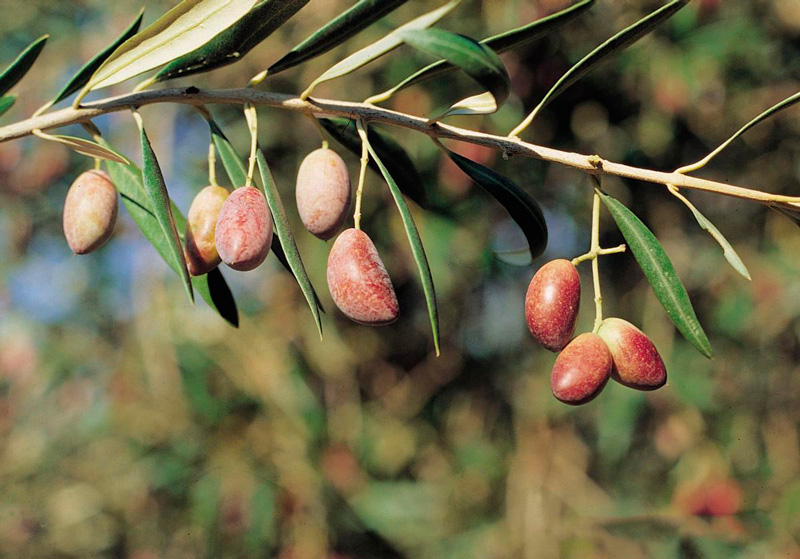
- Fruit: Elliptical and asymmetrical .
- Bone: Elongated
CORNICABRA
Name: Cornicabra gets its name from the curved shape of its fruit.
Other names: Cornal, Cornatillo and Cuernecillo.
Cultivation area: It is the second most widely cultivated Spanish variety. It is primarily grown in the provinces of Ciudad Real, Toledo, and Madrid, although it can also be found in the provinces of Cáceres and Badajoz.
Agronomic considerations: This vigorous variety roots easily and is highly adapted to poor soil and cold climates. It flowers late, and although it typically experiences high ovary abortion, it ensures sufficient fruit set when self-pollinated. The fruit ripens late and is highly resistant to detachment, making mechanized harvesting difficult. It begins producing fruit late, and its yield can be considered high and biennial. The oil yield is usually high, and its oil is highly valued for its organoleptic characteristics and high stability. It is also appreciated for its flavor and texture due to the quality of its pulp.
Resistances, tolerances, and susceptibilities:
- Tuberculosis: Highly susceptible
- Repilo : Not very resistant
- Verticillium wilt : Susceptible
Characters morphological :
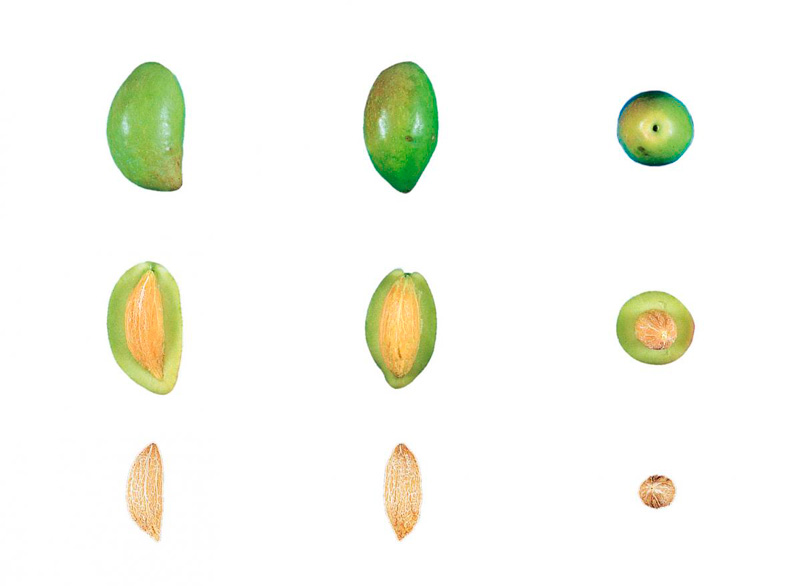
- Fruit: Elliptical and asymmetrical, large caliber.
- Leaf: Small, short and narrow
- Bone: Elongated and asymmetrical.
GORDAL FROM HELLÍN
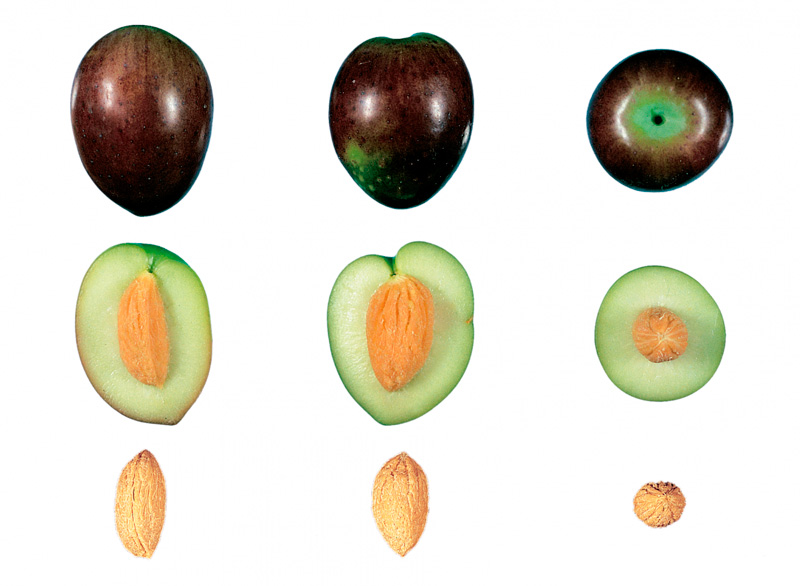
Name: Gordal from Hellín receives this name due to the size of its fruit and its growing region.
Other names: Benizal and Verdaleja .
Cultivation area: Very present in the Hellín region and widespread in the rest of the province of Albacete.
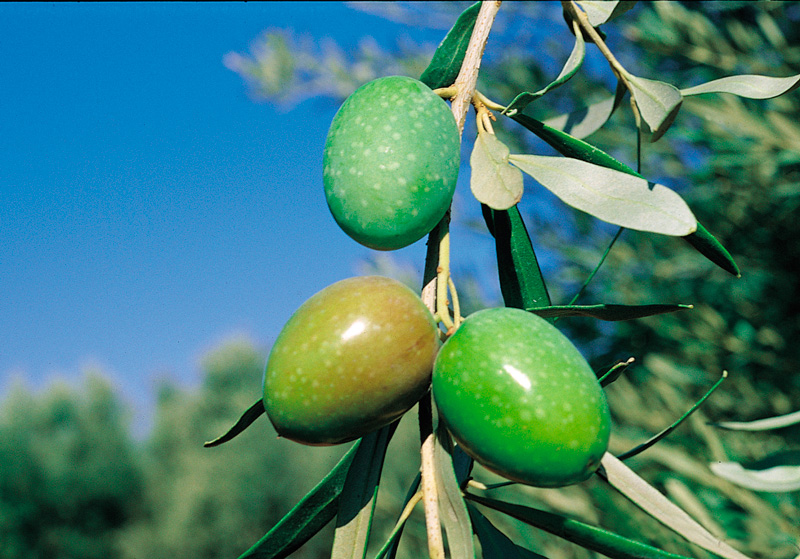
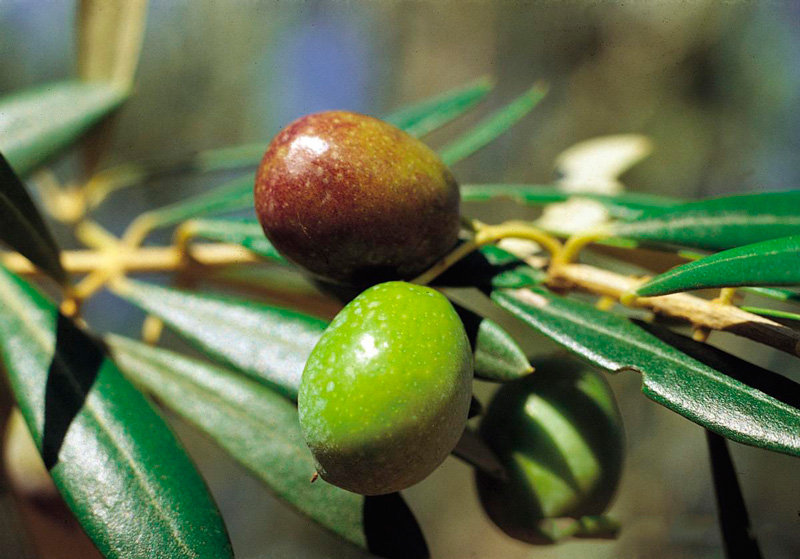
Agronomic considerations: It is very similar to Picual, differing from it in being more resistant to frost and having a higher fruit set percentage. Morphologically, there are no significant differences except for the fruit, which is larger.
Resistances, tolerances, and susceptibilities:
- Tuberculosis: Susceptible
- Repilo : Resistant
- Verticillium wilt : Resistant
Characters morphological :
- Fruit: Black when ripe, elongated and asymmetrical.
- Bone: Elongated
LECHIN FROM GRANADA
Name: Lechín from Granada.
Other names: Cuquillo.
Growing area: Main variety grown in southeastern Spain, in Granada, Almería, Murcia and Albacete.
Agronomic considerations: This variety has a mid-season flowering period and is considered self-compatible. It begins producing fruit early. Productivity is high and alternates between different growing seasons. The fruit ripens late and has a high retention capacity, which, along with its small size, makes any type of mechanical or manual harvesting difficult. It is a variety valued for its dual-purpose nature.
Its oil yield is high, producing excellent quality oil, yellowish in color and with low stability. In some regions within its growing area, it is also used for blackening, prized for its flavor and long shelf life once infused. It is a hardy variety, highly adaptable to calcareous soils and drought. It is also considered cold-tolerant.
Resistances, tolerances, and susceptibilities:
- Tuberculosis: Resistant
- Repilo : Susceptible
- Verticillium wilt : Susceptible
Characters morphological :
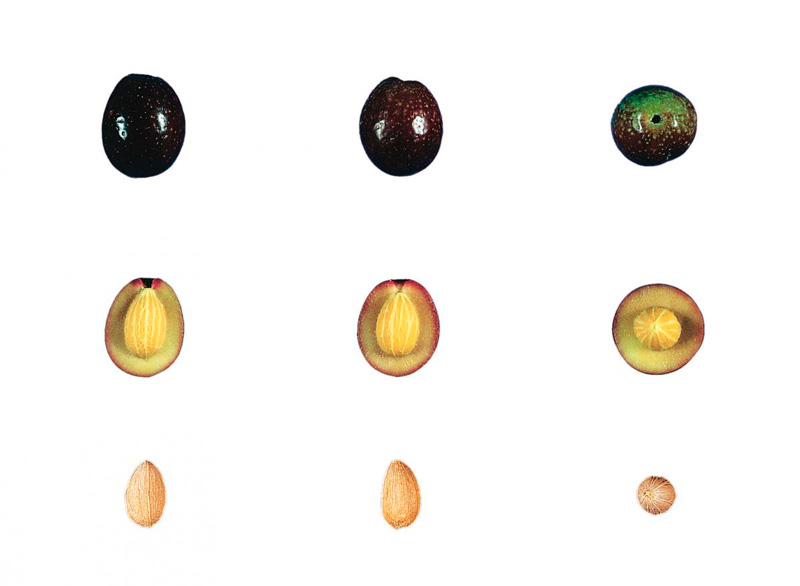
- Fruit: Black when ripe, small and oval.
- Bone: Small and rounded.
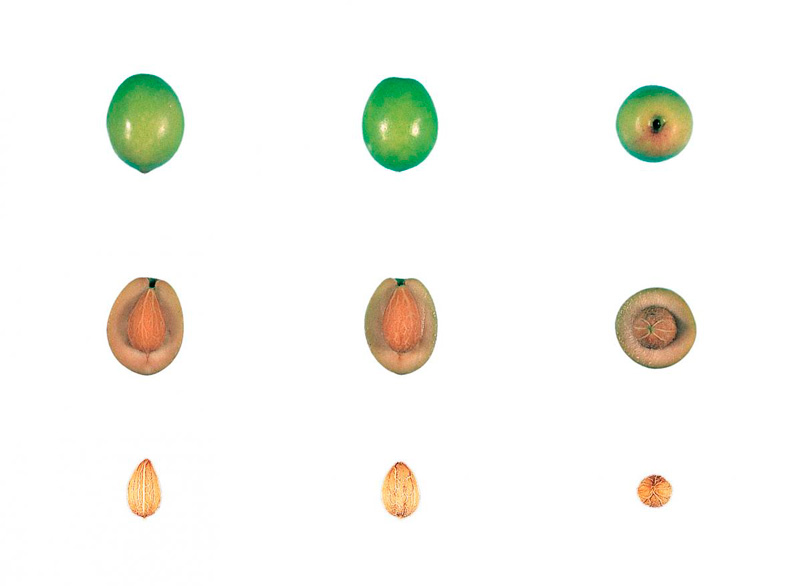
BLANQUETA
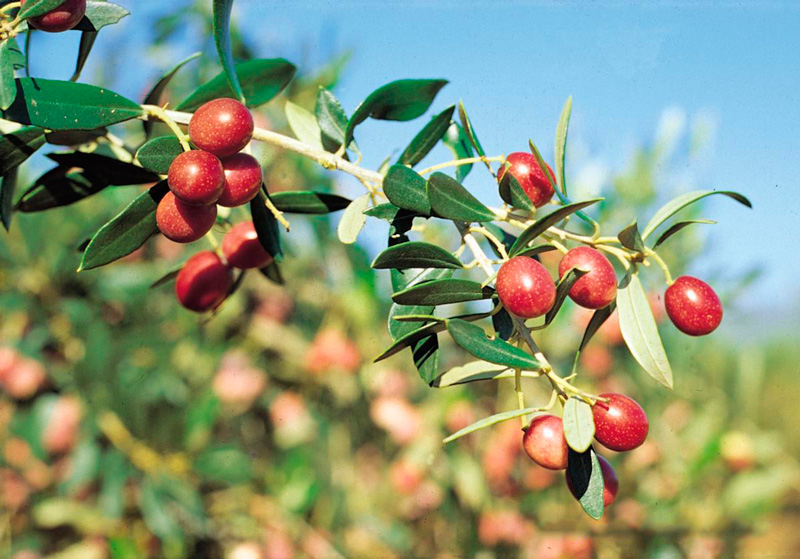
Name: Blanqueta, refers to the light color of the olive.
Other names: White and white olive.
Cultivation area: It is found in the Valencian Community, distributed almost equally between Valencia (Canal de Navarrés and Vall d’Albaida ) and Alicante (El Comtat and L’ Alcoia). It is grown in smaller quantities in regions such as La Manchuela or even the upper Ebro valley.
Agronomic considerations: This variety has low vigor but a high rooting capacity. It flowers late and its pollen has low germination. It begins producing fruit early and its productivity is high and consistent. The fruit ripens mid-season and has relatively high fruit retention, making mechanized harvesting difficult. Its oil content is high and highly valued.
Its oil is sweet and fruity but has very low stability. It is considered hard due to its adaptation to drought and its resistance.
Resistances, tolerances, and susceptibilities:
- Tuberculosis: Susceptible
- Repilo: Susceptible
- Verticillium wilt : Susceptible
Characters morphological :
- Fruit: Medium to small in size.
- Bone: Small and rounded.

