
OUR HISTORY
OIL PRESS
In 1995, the Acecasa olive mill was established at our current location, coming from an old olive mill located in the center of Hellín (Albacete).
The first milling carried out at the new location took place in the 1995-1996 campaign, milling a total of 200,000 Kg of olives from which about 30,000 Kg of olive oil were obtained.
It was from the year 2000 onwards that the olive mill began its constant transformation, both in facilities and machinery, increasing its kg of milled olives to 4,000,000.
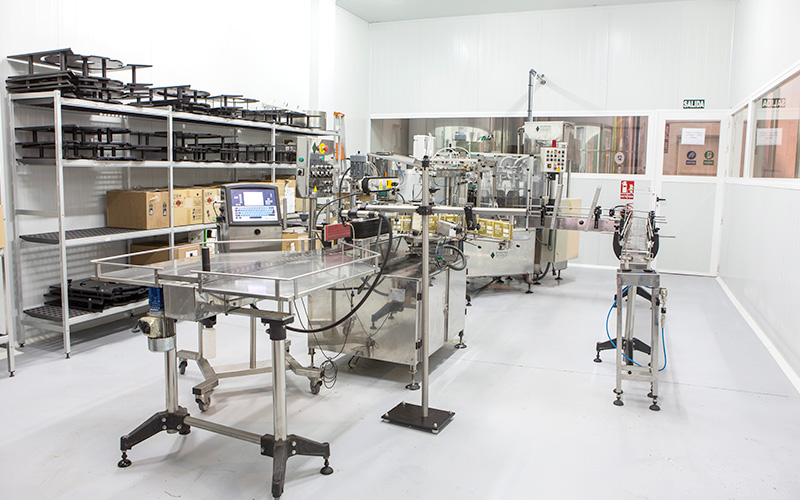
In 2010, apart from continuing to grow in milling capacity to 15,000,000 Kg, the company opted for the marketing of packaged oil, installing an automatic packaging and labeling line, thus moving from marketing only in tankers to a mixed marketing between tankers and packaging.
Since 2015, the latest modernization process of the olive mill has been carried out, leading to the current situation; an olive mill capable of grinding 30,000,000 kilos of olives by implementing state-of-the-art machinery, always seeking the highest quality of oil in the extraction and storage processes.
1995
- 200,000 kg ground
2000
- 4,000,000 kg ground
2010
- 15,000,000 kg ground
2015
- 30,000,000 kg ground
2025
- 40.000.000 Kg ground
GET TO KNOW OUR OLIVE MILL
Acecasa is your trusted olive oil mill. They offer you their extensive experience and modern machinery to extract the highest quality olives and transform them into premium oil.
RECEIVING, CLASSIFYING AND STORAGE
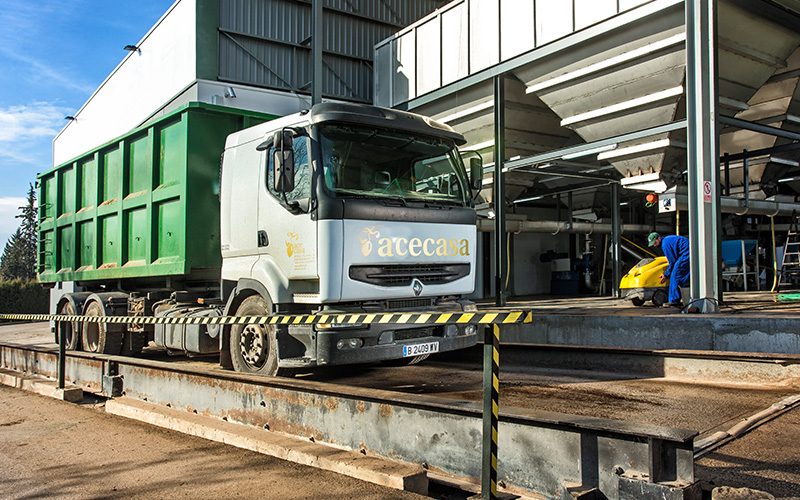
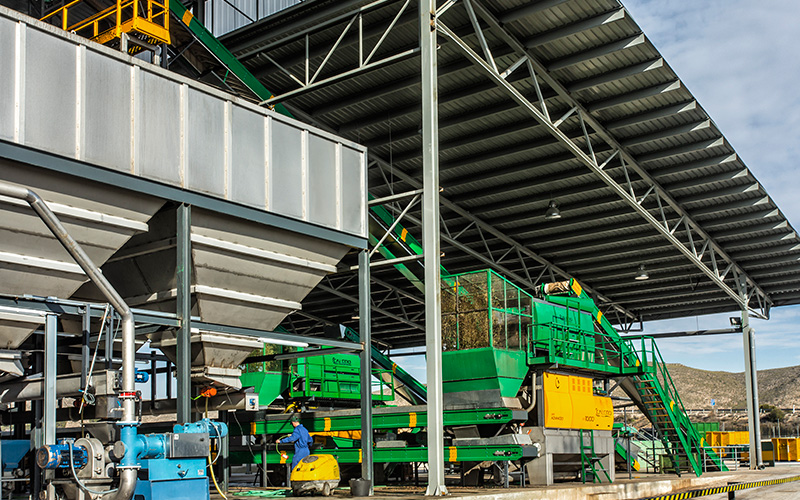
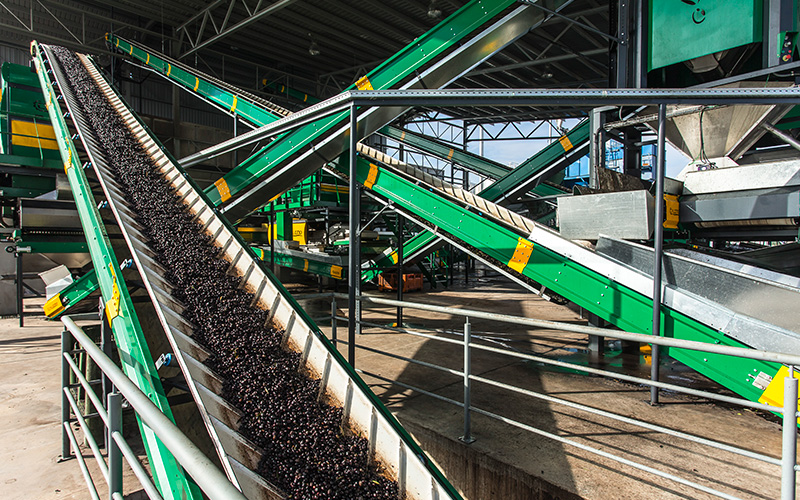
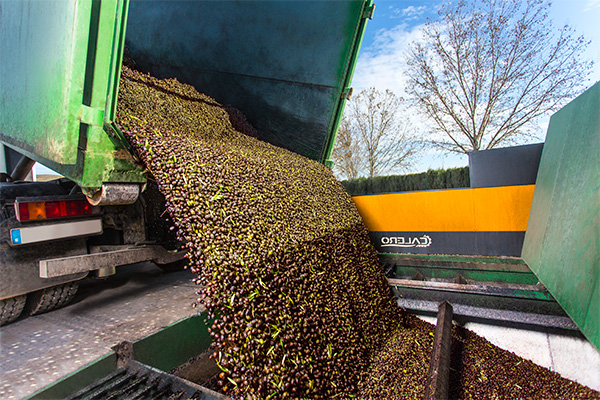
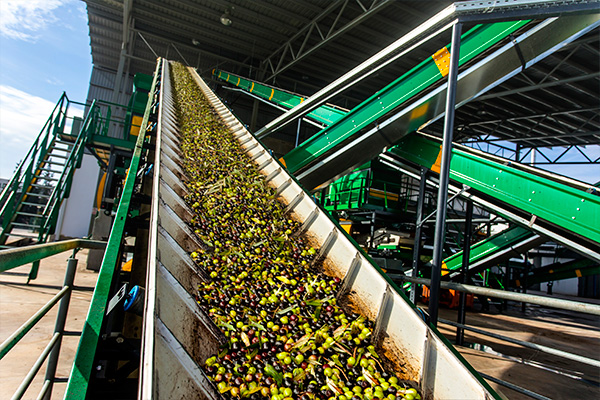
The olives are received in 12,000 kg stainless steel hoppers. They then undergo a cleaning and washing process before being weighed and sorted in stainless steel hoppers. The olives are classified according to their variety and quality.
According to their variety they are classified as: Arbequina, Picual, Benizal , Koroneiqui , Arbosana , Cornicabra, Sikitita , Cuquillo, Blanqueta.
According to their quality: olives harvested from the tree and olives harvested from the ground.
This process generates the branch and leaf by-product that is used for livestock feed.
RECEIPT, SORTING AND STORAGE
01.
FIRST EXTRACTION
02.
First extraction process
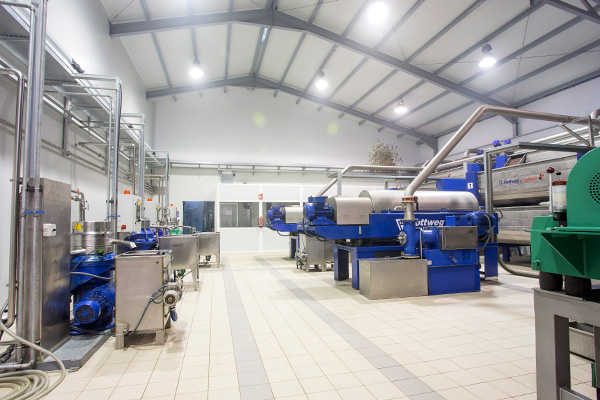
Once the olives are cleaned and sorted, they are ground in mills to generate olive paste.
This paste is fed into the factory and homogenised in the mixers to produce a paste that is uniform in terms of moisture content (50 per cent) and temperature (27 °C).
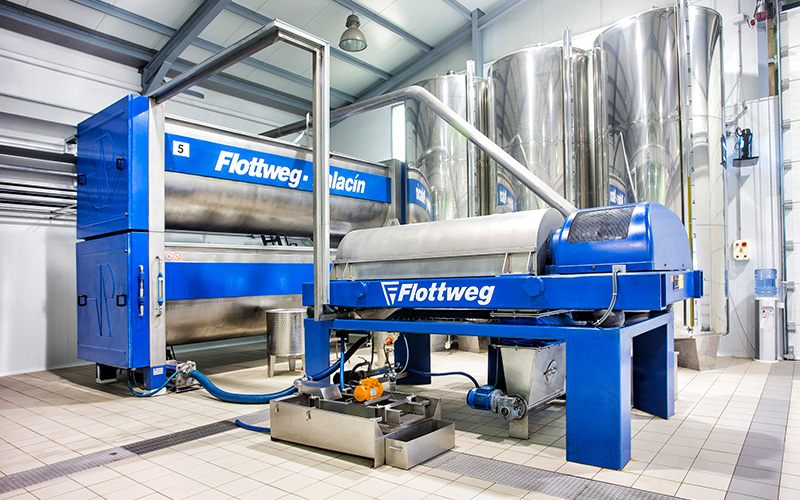
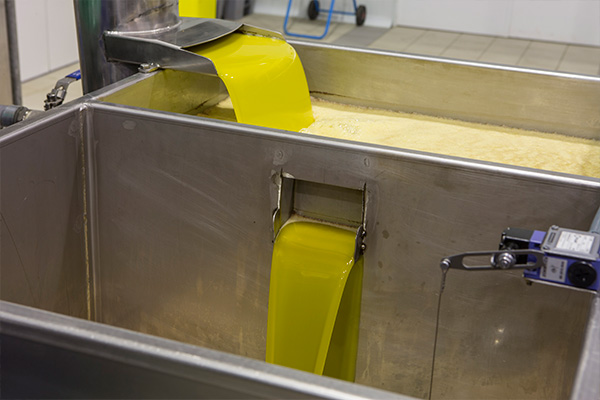
The paste is transferred from the mixer to the decanter, which, through the process of centrifugation, separates it into two phases: the liquid phase (oil) and the solid phase (pomace).
The liquid phase undergoes a further centrifugation process in vertical centrifuges, during which solid fractions contained in the oil are removed.
The final product, oil, undergoes a small decantation and is sent to the cellar.
Second extraction process
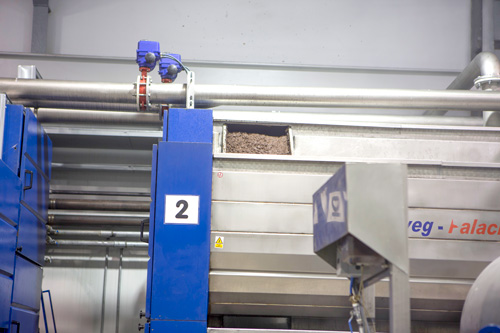
Building on the solid phase of the previous process, another mixing phase is carried out to further homogenise the mixture in terms of moisture content (65 per cent) and temperature (34 °C).
This paste is passed through a decanter once more and is again separated into two fractions: on the one hand, the ‘aceite de repaso’ and, on the other, the ‘alpeorujo’.
The main product of this process is Lapante-grade crude oil, which is used for further refining.
SECOND EXTRACTION
03.
PITTING OF THE POMACE
04.
Pomace deboning process
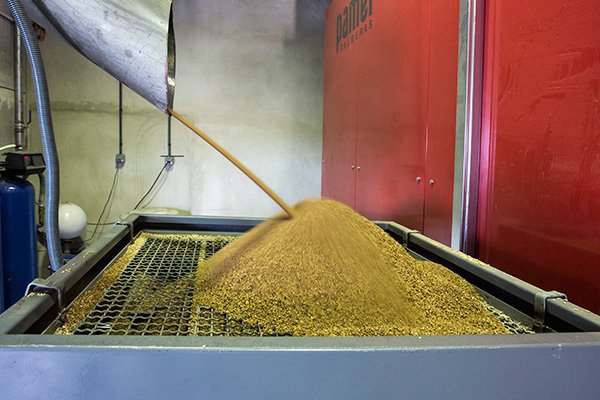
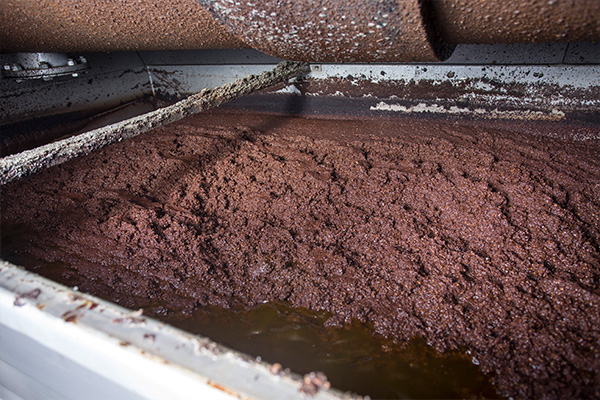
The seeds are removed from the alpeorujo produced during the second extraction process by means of a sieving process.
This process yields two by-products: the bone, used as biomass, and the pomace, from which pomace oil is subsequently extracted.
Oil filtration and storage process
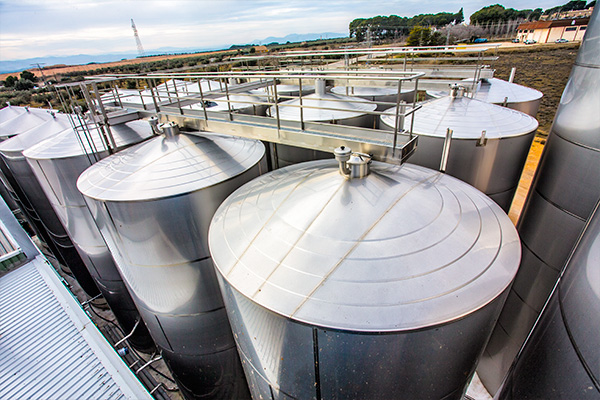
The oil is stored in stainless steel tanks of various capacities.
Once the oil has been stored, the settling process begins; after 25 days, it is transferred to another tank and filtered at this stage.
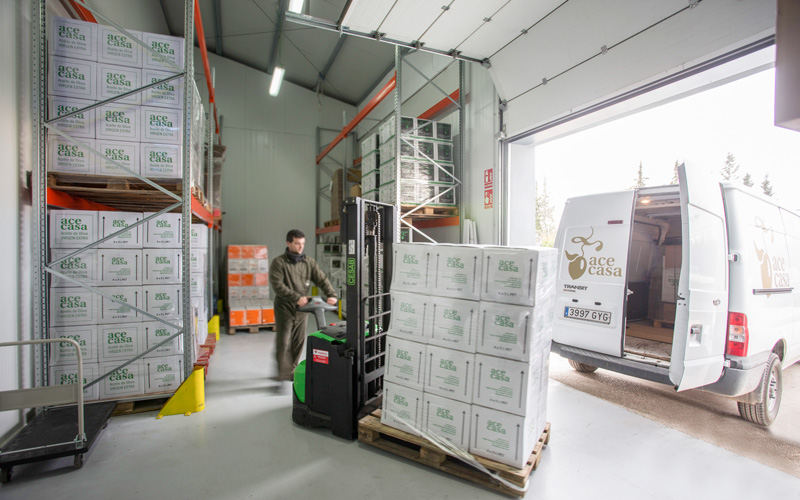
The finished oil would be in the best possible condition for bottling.
FILTERING AND STORAGE
05.

RECEIPT, SORTING AND STORAGE
01.
RECEIVING, CLASSIFYING AND STORAGE
The olives are received in 12,000 kg stainless steel hoppers. They then undergo a cleaning and washing process before being weighed and sorted in stainless steel hoppers. The olives are classified according to their variety and quality.
According to their variety they are classified as: Arbequina, Picual, Benizal , Koroneiqui , Arbosana , Cornicabra, Sikitita , Cuquillo, Blanqueta.
According to their quality: olives harvested from the tree and olives harvested from the ground.
This process generates the branch and leaf by-product that is used for livestock feed.
FIRST EXTRACTION
02.
First extraction process
Once the olives are cleaned and sorted, they are ground in mills to generate olive paste.
This paste is introduced into the factory and homogenized in the mixers, to obtain a paste that is homogeneous in moisture (50%) and temperature (27ºC).
The paste passes from the mixer to the decanter which, through the centrifugation process, separates it into two phases: liquid phase (oil) and solid phase (olive pomace).
The liquid phase goes through another centrifugation process, in vertical centrifuges, in which fractions of solid contained in the oil are removed.
The final product, oil, undergoes a small decantation and is sent to the cellar.
SECOND EXTRACTION
03.
Second extraction process
Starting from the solid phase of the previous process, another beating phase is carried out for a new homogenization of the mass of moisture (65%) and temperature (34 ºC ).
This paste is passed through a decanter again and is divided into two phases: on one side the refining oil and on the other the pomace or lampante quality refining oil , which is used for further refining.
The main product of this process is Lapante-grade crude oil, which is used for further refining.
PITTING OF THE POMACE
04.
Pomace deboning process
from the olive pomace generated in the second extraction process through a screening process.
This process yields two by-products: the bone, used as biomass, and the pomace, from which pomace oil is subsequently extracted.
FILTERING AND STORAGE
05.
Oil filtration and storage process
The oil is stored in stainless steel tanks of varying capacities.
Once the oil is stored, the decantation process begins. After 25 days, the oils it´s move to another tank with an intermediate filtration.
The finished oil would be in the best possible condition for bottling.

